The Realtor walked us through the condo we were interested in with her cell phone camera. There were definitely some surprise things that were not featured in the pictures on Redfin. Extra stairs. Odd floors. In any event, the seller accepted an offer from someone else in the meantime.
For the past couple of years, we’ve been seriously considering moving to Chicago. Originally we were going to wait until 2022, but it’s looking like we need to move up that schedule to Spring 2021.
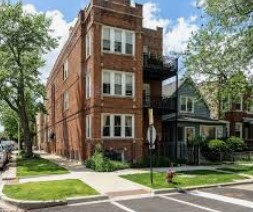
We’ve been looking at lots and lots of condos on Redfin this summer in order to get a feel for what’s available in various neighborhoods. We have found one for sale that we might want to go ahead and get now. It has lots of windows and appears to be on a pleasant tree-lined residential street in Albany Park (or Irving Park, depending on who you ask – it’s near the border between the two in any event). We’re going to get the Realtor to give us a remote tour with her cell phone.
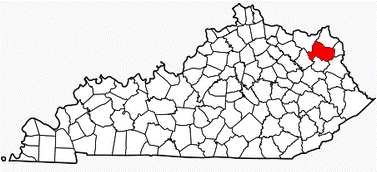
East Kentucky, that is. We loaded up the Datsun and headed to Carter County, in far eastern Kentucky and Carter Caves Kentucky State Park.
Carter County
I don’t think it had anything to do with these Carters
Carter County is named for Kentucky State Senator William Grayson
Carter. Apparently the neighboring counties got too big and had to be
redistricted and this new county was named after him. Kentucky has a
ridiculously large number of counties for a state of its population. A
tremendous amount of taxpayer money could be saved by consolidation.
But that is not the subject of this post.
Carter Caves State Park is situated in the typically beautiful East Kentucky hills. It does have a number of caves (twenty), but they were all closed due to the corona pandemic. Actually, nearly all the park’s amenities were closed, including the canoe tours, swimming pool, playground, restaurant, and miniature golf course. Nevertheless, it was worth the trip.
Perhaps because so many of the family activities were not available, it wasn’t very crowded. All the hiking trails were open, and we were able to see lots of trees (lots), lots of big rocks (lots), and big rock bridges, which were as impressive as caves and much less claustrophobic.
We stayed in the motel in the park. It was the usual park motel room, with a deck that allowed us to listen to the birds sing, and one night, watch a deer eat. Deer are surprisingly noisy eaters.
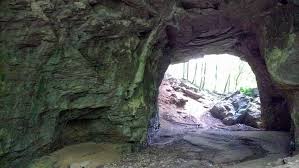
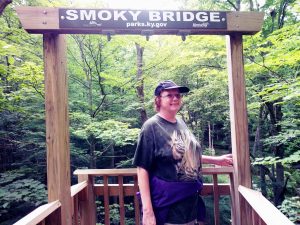
We walked through big holes in rocks, like here in Smoky Bridge
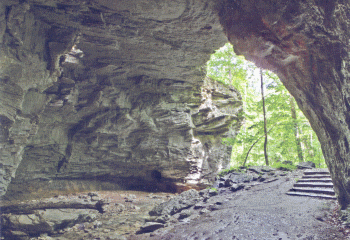
Another view of Smoky Bridge
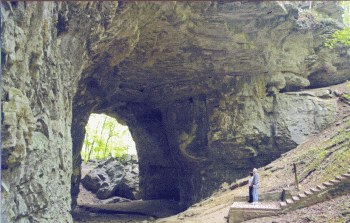
On top of Smoky Bridge
Yet another huge bridge at the park
I enjoy hiking the Kentucky woods, and had a great time. CVH was less pleased with the way the hills kept going up and down and up again.
When I was a small tot, I remember going with my mother to the grocery store. She spent $20 each week to feed two adults and a small child. Once I went with a family friend on their shopping trip; they were a little more well off than our family, and that mom spent $40 for a week of food for two adults, a teenage boy, and a small child. At the time, I thought that was an awful lot, but that was before I discovered how much teenagers eat.
In October 1980, I made a note of how much my usual items were costing at my local Kroger in Clear Lake, Texas. I held onto that list for thirty-nine years, and thanks to the internet, was able to compare those prices then with the prices in September 2019 at the same Kroger.
I was surprised at many of the results. After adjusting for changes in package size, I compared the prices against the change in the Consumer Price Index for the same period (approx. 2.938).
Some things are a lot cheaper, notably dairy products:
Item
Adjusted Price Change since 1980
Dozen large eggs
-64%
Gallon milk
-63%
24 oz elbow macaroni
-53%
5 lb Russet potatoes
-50%
Gallon distilled water
-48%
Pound cheddar
-45%
Frozen fish sticks
-40%
Canned tomatoes
-33%
Pound onions
-32%
Canned tuna
-31%
Chips Ahoy cookies
-23%
Kleenex
-16%
Some things are a lot more expensive:
Item
Adjusted Price Change since 1980
Coca-cola
62%
Clorox
52%
Folger’s coffee
45%
Nabisco Saltines
37%
Hunt’s ketchup
37%
What conclusions can we draw from these data? Why is Clorox higher (remember, this was before corona shortages)? Why are canned tomatoes so much cheaper, but ketchup so much higher? Ketchup is just tomatoes and HFCS – maybe HFCS has gone way up; that would help explain the increase in Coca-cola (which is HFCS and water). And what in the world is up with saltine crackers? Are they putting Clorox in them? How could Chips Ahoy cookies be cheaper, when they’re really just a combination of HFCS and saltines?
This story is potentially an argument against unemployment stimulus payments, as apparently some people have way too much time on their hands.
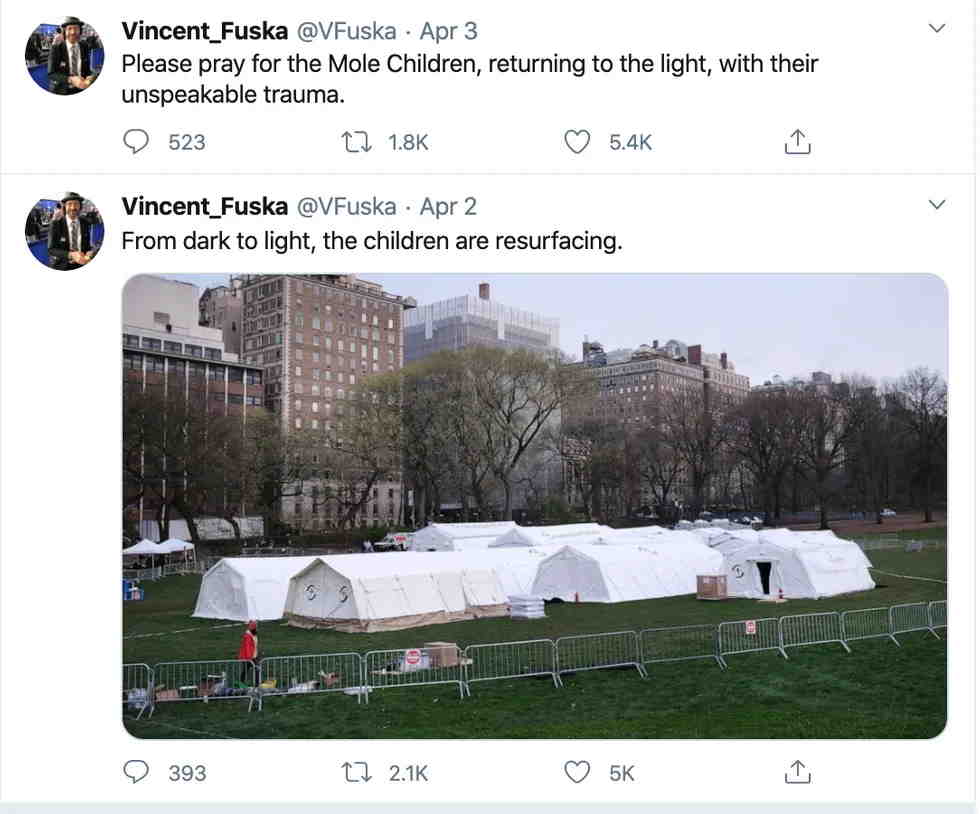
These people think that New York City’s Central Park is currently teeming with mole children who had been living in underground tunnels, and who have recently been rescued by the US military, on the orders of Donald J. Trump.
Seems that the COVID-19 epidemic is a big ruse meant to keep people in their houses while the US military rescues thousands of children from underground tunnels, some of which they claim are right underneath Central Park. These children were transported to the Navy hospital ships — the USNS Comfort in New York and the USNS Mercy in Los Angeles. Now these children are being treated in all of the tents that were set up in Central Park to treat people with COVID-19.
“Mole child”
The mole children, it is claimed, have lived underground all of their lives, and are thus “deformed” and sensitive to light (because it’s dark down there in the tunnels). They have, of course, been bred for the specific purpose of being sex slaves, but also for being eaten and having their adrenal glands harvested so coastal elites can get high on their adrenochrome.
Bat Boy, we still miss you.
Actually, as someone who used to read the hilariously deadpan Official UFO Magazine back in the seventies, and closely followed the trials and tribulations of Bat Boy in the late, great Weekly World News, I kinda enjoy this stuff.
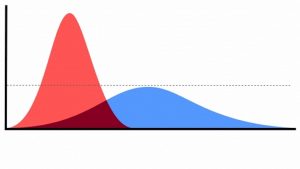
…does not necessarily mean that the area under the curve diminishes.
Before getting out of bed the other morning, I asked CVH (Masters, Public Health) about corona lockdowns. There won’t be a vaccine for at least a year. Consequently, until enough people get sick and develop immunity (assuming they develop immunity; that is not clear at this point), lifting the lockdowns will just cause infections to soar as if there had never been lockdowns. I asked her, therefore, if the lockdowns are lifted before the widespread administration of a vaccine, are we just prolonging the inevitable?
“Yes,” she said. “Epidemiology science tells us the only way to control a pandemic like this would have been to have widespread testing early on. We didn’t, and we don’t, so it’s just going to run its course through the population regardless.”
Economists quoted in The Wall Street Journal estimate current unemployment to be around thirteen to fifteen percent. If the lockdowns aren’t lifted, Great Depression level unemployment is certain.
“So, it’s guaranteed that we’re going to see mass deaths, or a major economic depression, or both?” I asked.
“That’s right,” she replied, ruining my whole day.
I spoke with the neighbor across the street the other night (from an appropriate distance). She asked how CVH and I were getting along.
“Pretty well,” I said. “Frankly, I am pleasantly surprised. I wasn’t sure what was going to happen with us being cooped up together for so long, but we’re actually getting along just fine. We haven’t been stuck with each other this much since the honeymoon. I guess we really do love each other. Who knew?”
I try to follow the Thumper rule: if you can’t say anything nice…and capitalize on those occasions when I can say something positive. I told CVH this story and she said she would take it in the manner in which she would like to think it was intended.